
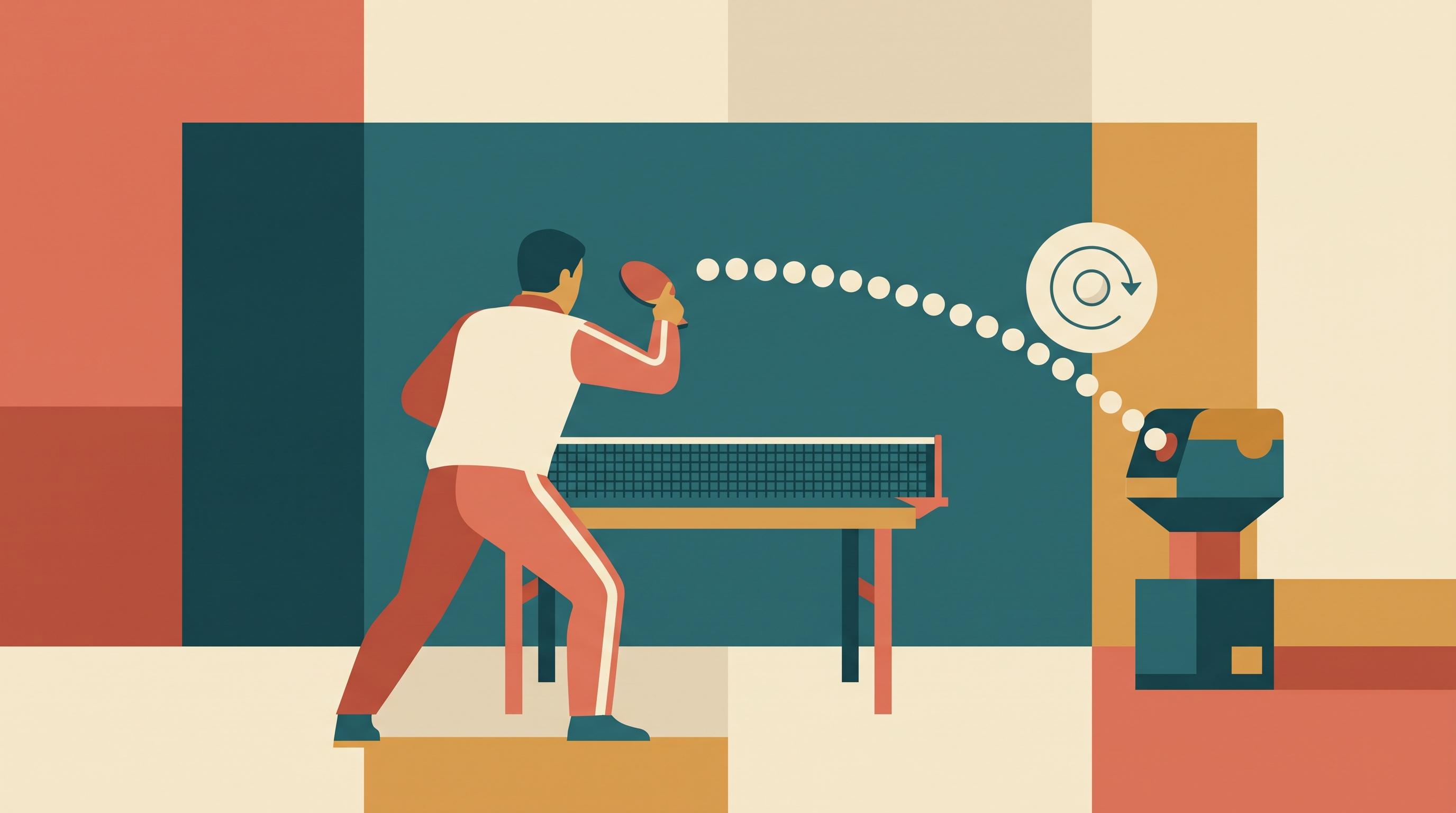
Are Table Tennis Robots Worth It?
A robot is worth it when it gives you practice you would otherwise miss. What it does well, what it cannot replace, and the full cost before you buy.
4 min read
26 Nov, 2026
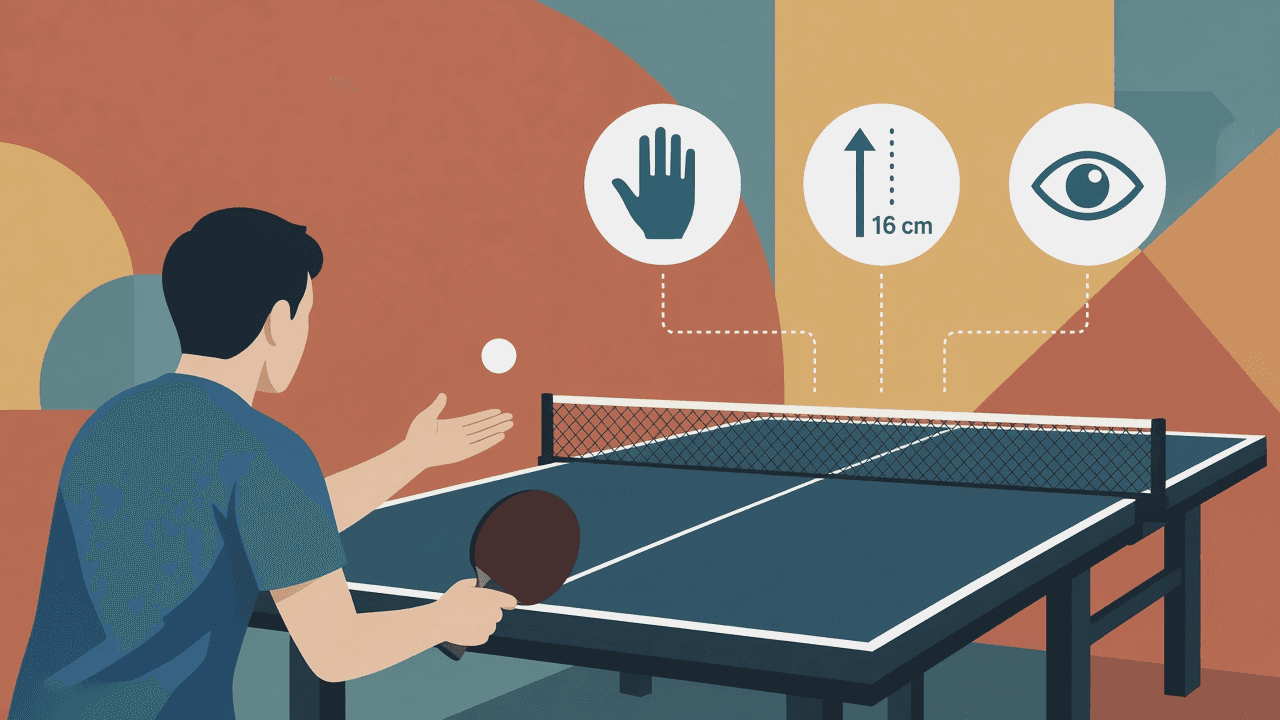
A legal serve in table tennis is short to describe and easy to get wrong. Most club arguments about serves are the same few points, so here they are in one place.
This is the practical checklist. It follows the ITTF Laws of Table Tennis. Club play is usually looser than an umpired match, but if you learn the legal serve once, you stop guessing.
The rulebook gives no angle for "near vertically". Umpires judge it by eye, so a toss that clearly drifts sideways, backwards or towards the receiver is the one that gets called.
You lose the point on the serve if, among other things:
A let is different. If the serve touches the net assembly and still lands correctly on the other side, it is a let and you serve again. That is not a lost point.
At most club evenings nobody is umpiring with a ruler. What usually matters is: open palm, clear toss, ball stays visible, bounce on your side then theirs. If both of you can agree on that, the match keeps moving.
If you want the score itself handled without another argument, that is what a scorekeeper is for. The serve still has to be legal.
A robot is worth it when it gives you practice you would otherwise miss. What it does well, what it cannot replace, and the full cost before you buy.
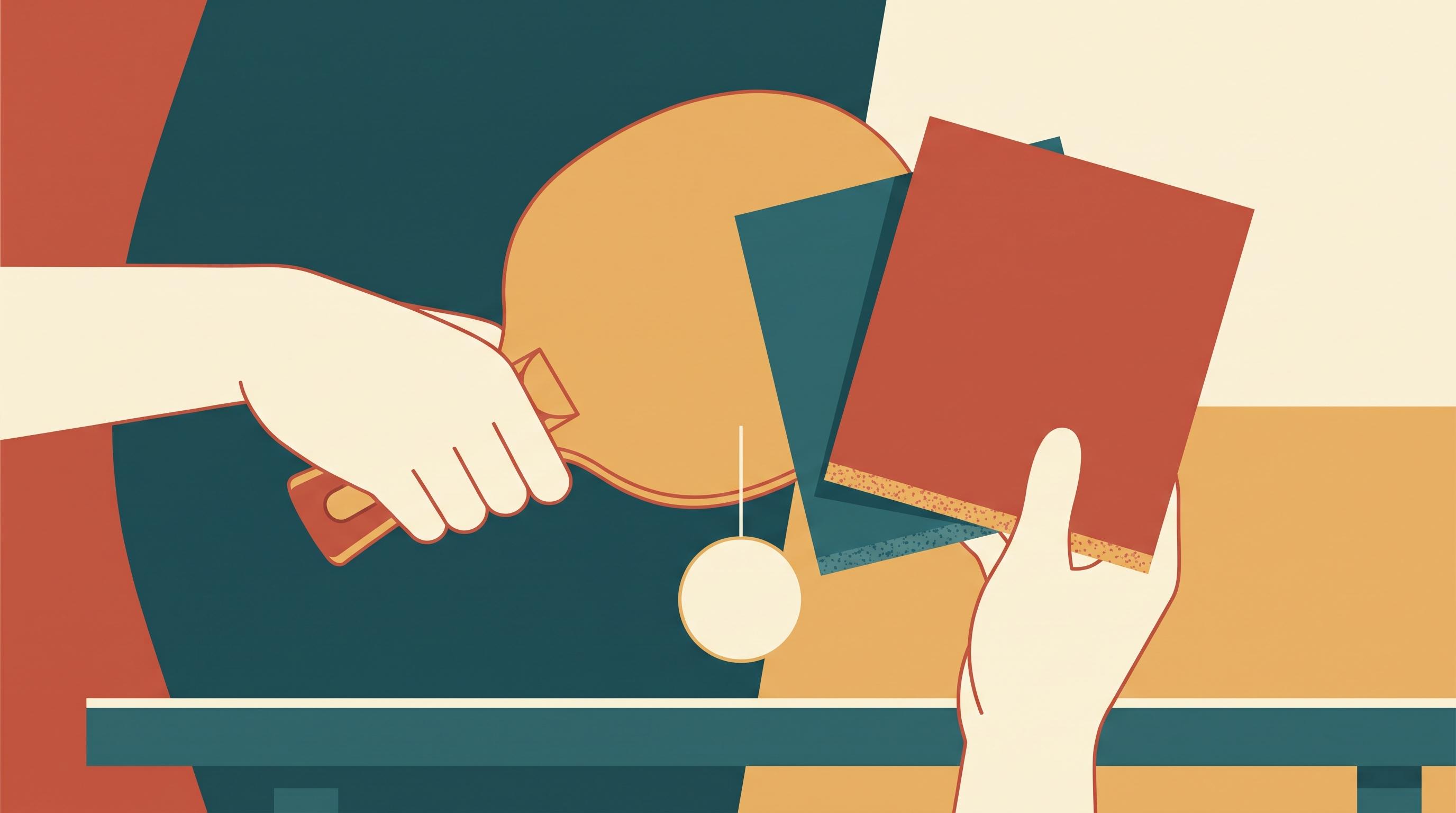
A good racket is about the parts you get, not who assembled it. When a premade racket makes sense, when custom is worth it, and how to test either one...
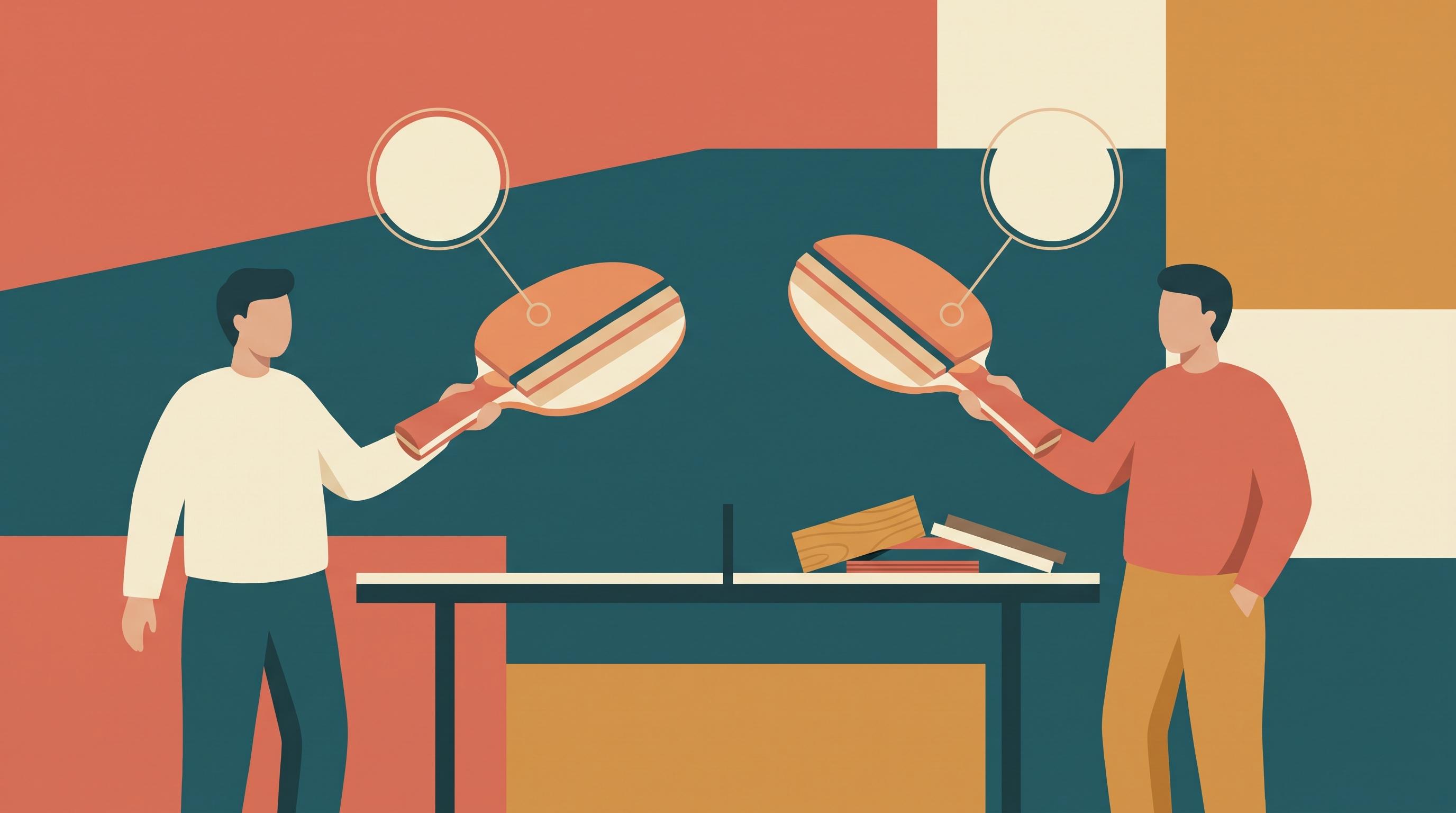
Carbon is a material, not an upgrade. How blade construction changes the feel, why all-wood is not only for beginners, and how to compare blades prope...
A robot is worth it when it gives you practice you would otherwise miss. What it does well, what it cannot replace, and the full cost before you buy.
A robot is worth it when it gives you practice you would otherwise miss. What it does well, what it cannot replace, and the full cost before you buy.
A good racket is about the parts you get, not who assembled it. When a premade racket makes sense, when custom is worth it, and how to test either one...
A good racket is about the parts you get, not who assembled it. When a premade racket makes sense, when custom is worth it, and how to test either one...
Carbon is a material, not an upgrade. How blade construction changes the feel, why all-wood is not only for beginners, and how to compare blades prope...
Carbon is a material, not an upgrade. How blade construction changes the feel, why all-wood is not only for beginners, and how to compare blades prope...

Download the app and take your game everywhere: on mobile, tablet, or smartwatch.