
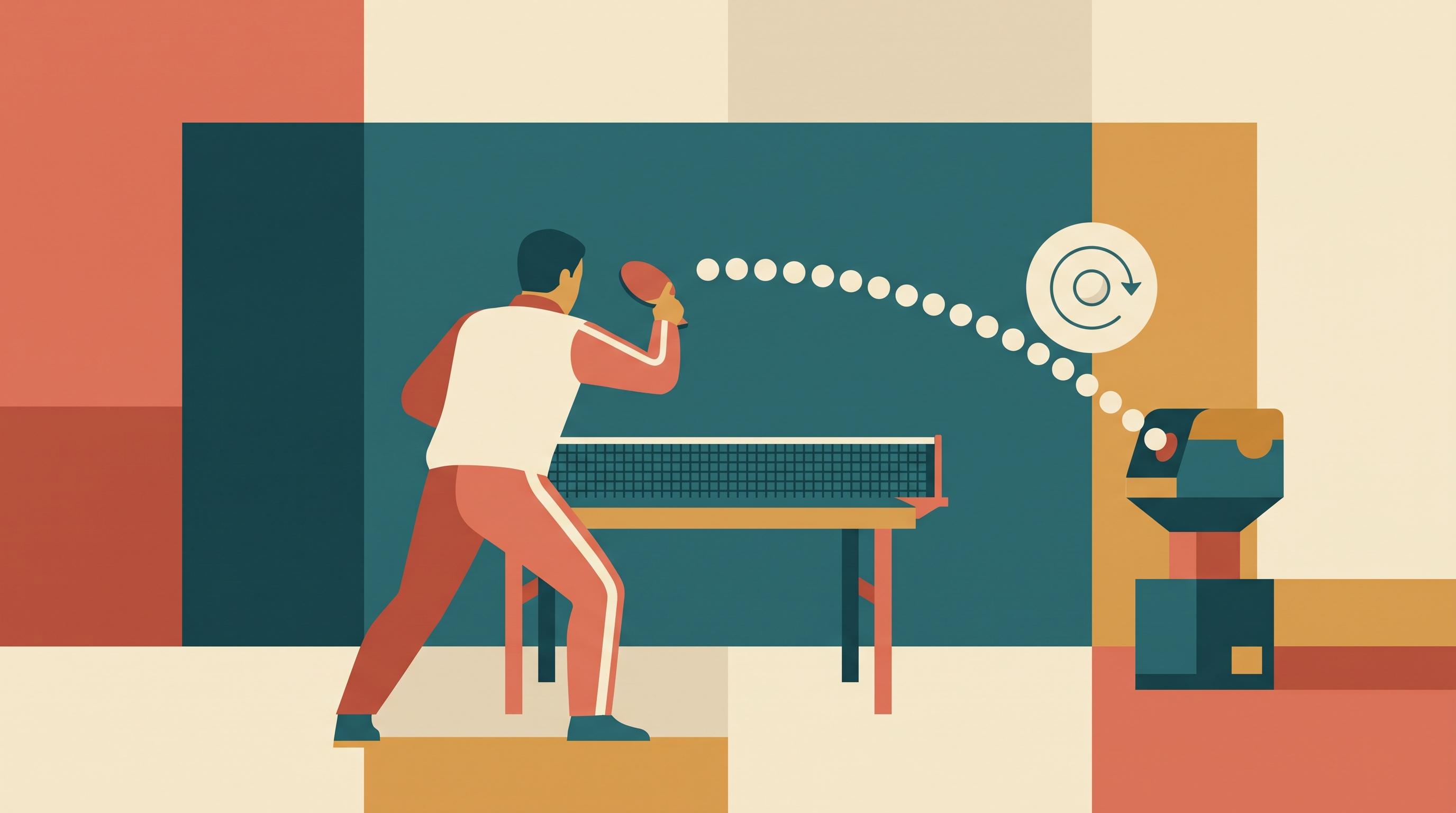
Are Table Tennis Robots Worth It?
A robot is worth it when it gives you practice you would otherwise miss. What it does well, what it cannot replace, and the full cost before you buy.
4 min read
26 Nov, 2026
A racket is too fast for your present needs when its response repeatedly prevents you from executing the strokes you are trying to learn or use. Price, carbon content and a professional player's endorsement cannot answer that question for you.
Missing long does not prove the racket is the problem. Late contact, a misread serve, poor positioning or an open racket angle can produce the same result. The useful approach is to look for a pattern, then test one change at a time.
When borrowing a racket, players often hit a few powerful forehands and decide immediately. That tests a small part of the game. Your racket also has to receive serves, keep pushes low, block fast balls and remain manageable when you are out of position.
Try a short assessment with a cooperative partner. Play several minutes of controlled drives, blocks, pushes and serve receive before attempting stronger loops. Notice whether you can complete an ordinary stroke comfortably or keep shortening and steering it to avoid overshooting.
Coach Larry Hodges warns that excessively fast rackets can encourage players to stroke less and develop compensations. His advice is coaching guidance, not a guarantee that a particular speed category suits everyone. Hodges on very fast rackets
An inconsistent toss or unread sidespin will remain a problem with a slower racket. If errors occur primarily against unfamiliar serves, practise recognising the ball rather than treating every long return as excess equipment speed.
If you struggle even with predictable, moderate feeds, check the stroke with a coach. Ask whether your contact and recovery are broadly appropriate before changing the equipment. A video from the side can reveal that what feels like a short stroke is actually a late, hurried contact.
Also check the condition of the rubber. Slipping contacts from contamination or wear can make your results inconsistent without the blade being too fast.
Borrow a more manageable setup for the same drills on the same table, preferably during the same session. Keep the ball, partner and target areas unchanged. Record successful returns from several short sets rather than trusting the first impression.
Count quality as well as balls on the table. Did the push stay low? Did the block reach its target? Could you recover without freezing the racket in place? A slower setup that merely turns every attack into a harmless ball is not automatically better.
If possible, keep the rubber model or blade constant between comparisons. Changing everything together may identify a preferable complete racket, but it cannot tell you which component caused the difference.
You may need a different blade, a less lively rubber, another thickness, or no change at all. Rubber thickness and sponge hardness affect response, while blade construction adds another set of variables. Manufacturers' own specification guides illustrate why the whole setup matters. Butterfly rubber specifications
Describe your problem precisely to a retailer: for example, controlled blocks against a predictable topspin feed keep going long, while your current rubber is clean and in good condition. That is more useful than asking for maximum control and maximum spin.
Keep the grip comfortable and avoid changing both sides unnecessarily. Your aim is a racket that allows confident, repeatable contact across the session. Once you find that, spend enough time learning with it to judge progress. Changing equipment every week makes both technique and equipment harder to evaluate.
A robot is worth it when it gives you practice you would otherwise miss. What it does well, what it cannot replace, and the full cost before you buy.

A good racket is about the parts you get, not who assembled it. When a premade racket makes sense, when custom is worth it, and how to test either one...

Carbon is a material, not an upgrade. How blade construction changes the feel, why all-wood is not only for beginners, and how to compare blades prope...
A robot is worth it when it gives you practice you would otherwise miss. What it does well, what it cannot replace, and the full cost before you buy.
A robot is worth it when it gives you practice you would otherwise miss. What it does well, what it cannot replace, and the full cost before you buy.
A good racket is about the parts you get, not who assembled it. When a premade racket makes sense, when custom is worth it, and how to test either one...
A good racket is about the parts you get, not who assembled it. When a premade racket makes sense, when custom is worth it, and how to test either one...
Carbon is a material, not an upgrade. How blade construction changes the feel, why all-wood is not only for beginners, and how to compare blades prope...
Carbon is a material, not an upgrade. How blade construction changes the feel, why all-wood is not only for beginners, and how to compare blades prope...
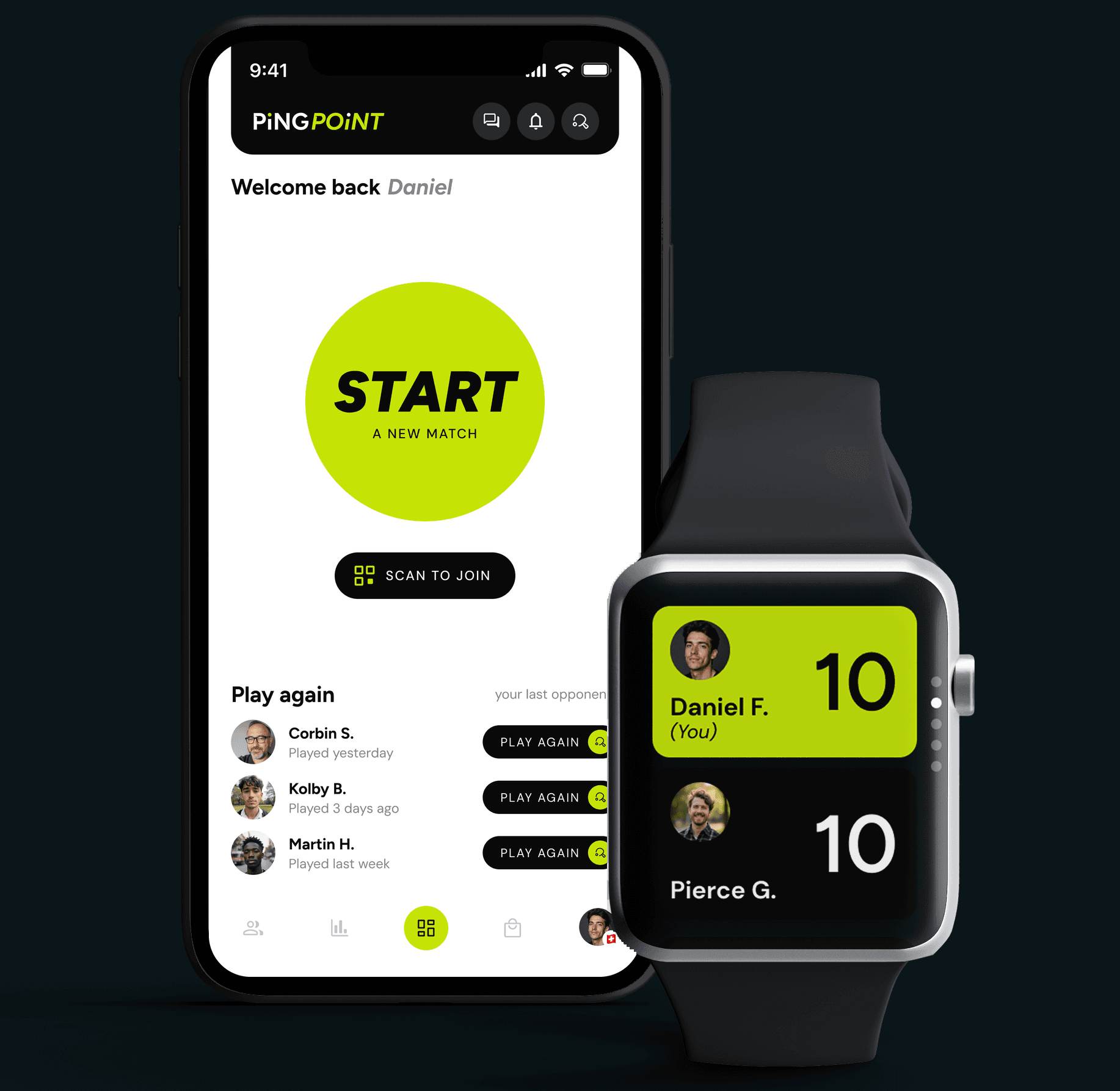
Download the app and take your game everywhere: on mobile, tablet, or smartwatch.