
Hard or Soft Table Tennis Rubber?
Harder is not automatically better, and soft is not only for beginners. What the hardness number means and how to compare two rubbers fairly.
4 min read
12 Nov, 2026
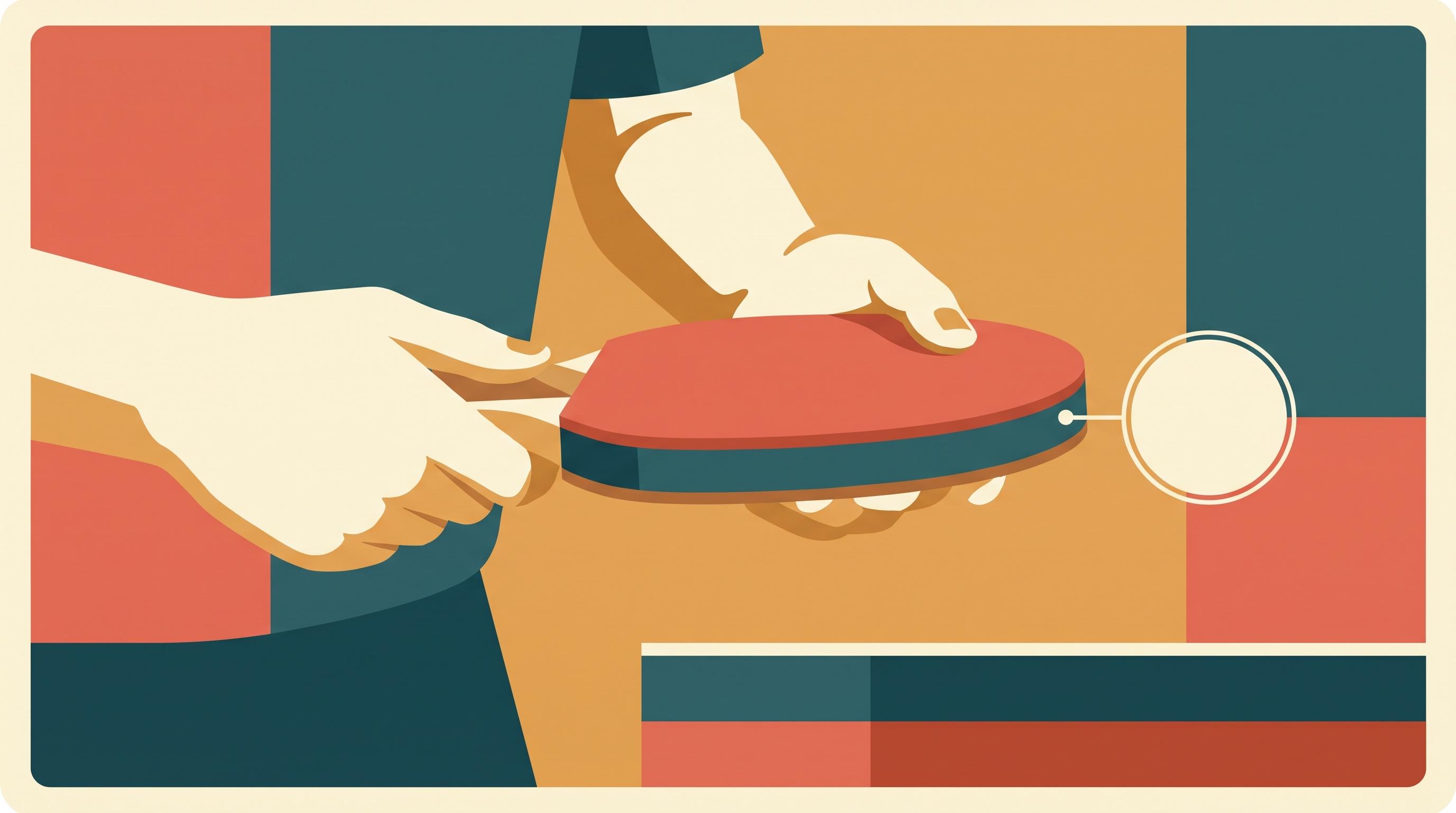
Choose rubber thickness by the response you need from the complete racket, rather than assuming MAX is the best version. A thicker sheet can offer more attacking response, while another player may prefer the weight and feedback of a thinner option. Neither choice removes the need for sound contact.
The cleanest comparison is between thicknesses of the same rubber on the same blade. Comparing a soft 1.8 mm sheet with a hard MAX sheet from another brand changes too many things to isolate thickness.
For conventional sandwich rubber, labels such as 1.8 or 2.0 mm usually refer to the sponge option, not the total racket-covering thickness. The topsheet sits above it. Always check the manufacturer's description because naming, production tolerances and MAX labels vary.
Butterfly's specification guide explains thickness as a selectable sponge property and associates thicker options with increased weight and bounce within its general comparison. This is a useful tendency, not a complete ranking of every rubber sold. Butterfly rubber specifications
The legal limit concerns the complete covering, including adhesive, rather than the sponge number alone. The 2026 laws set that limit, adhesive included, at less than 2.05 mm for ordinary pimpled rubber and less than 4.05 mm for sandwich rubber, subject to technical tolerances; the pimpled topsheet of a sandwich rubber may itself be no thicker than 2.0 mm. Buy an approved, appropriate combination and avoid interpreting a sponge label as a legality certificate. ITTF Statutes 2026 section 2.4.3
Test thickness through the shots you actually use. A difference that seems exciting during a hard loop may matter less than how comfortably you receive, block and recover.
Pay attention to racket weight and balance as well as ball speed. Even if two options feel similar on contact, an increase in head weight may affect repeated backhand exchanges or quick changes between sides. The exact weight difference depends on the product, cut size and sample.
Avoid treating thicker sponge as harder sponge. Thickness and hardness are separate specifications. Likewise, the response of a high-tension 1.8 mm sheet cannot be inferred from the thickness of an unrelated classical rubber.
If you are unsure, ask your coach or retailer to recommend an available middle option in a suitable rubber family. Explain your level, blade and usual strokes. A modest, stable starting point makes later comparisons easier.
You do not need to choose different thicknesses merely because one side is forehand and the other backhand. Different choices can make sense, but should solve an observed need. If both sides currently feel manageable, using the same model and thickness can simplify learning and replacement.
| What you want to investigate | Comparison to make |
|---|---|
| Short-game response | Push and receive with the same rubber in two thicknesses |
| Stronger attacking response | Compare controlled and stronger topspins, not only smashes |
| Easier handling | Compare complete racket weight and transitions |
| Backhand suitability | Test blocks, opening loops and recovery under pressure |
Players sometimes explain every miss by saying the sponge bottomed out. That description can refer to a genuine feeling of contact through the sponge, but it is not a diagnosis available from the thickness label alone.
First check timing, incoming spin, blade response and whether the rubber is in good condition. A coach watching the contact can be more useful than moving immediately to the thickest version.
When you change thickness, keep the rest of the setup stable and allow several sessions of adaptation. Write down what improved and what became harder. The right choice is the one that improves the whole game you are building, not the option with the largest number.
Harder is not automatically better, and soft is not only for beginners. What the hardness number means and how to compare two rubbers fairly.

Touching the table is not automatically a fault. What the rules actually say about the free hand, the racket hand, moving the table and touching the n...
Months on the racket are a reminder to check, not an expiry date. Five signs your rubber needs replacing, what manufacturers say about lifespan, and h...
Harder is not automatically better, and soft is not only for beginners. What the hardness number means and how to compare two rubbers fairly.
Harder is not automatically better, and soft is not only for beginners. What the hardness number means and how to compare two rubbers fairly.
Touching the table is not automatically a fault. What the rules actually say about the free hand, the racket hand, moving the table and touching the n...
Touching the table is not automatically a fault. What the rules actually say about the free hand, the racket hand, moving the table and touching the n...
Months on the racket are a reminder to check, not an expiry date. Five signs your rubber needs replacing, what manufacturers say about lifespan, and h...
Months on the racket are a reminder to check, not an expiry date. Five signs your rubber needs replacing, what manufacturers say about lifespan, and h...

Download the app and take your game everywhere: on mobile, tablet, or smartwatch.