
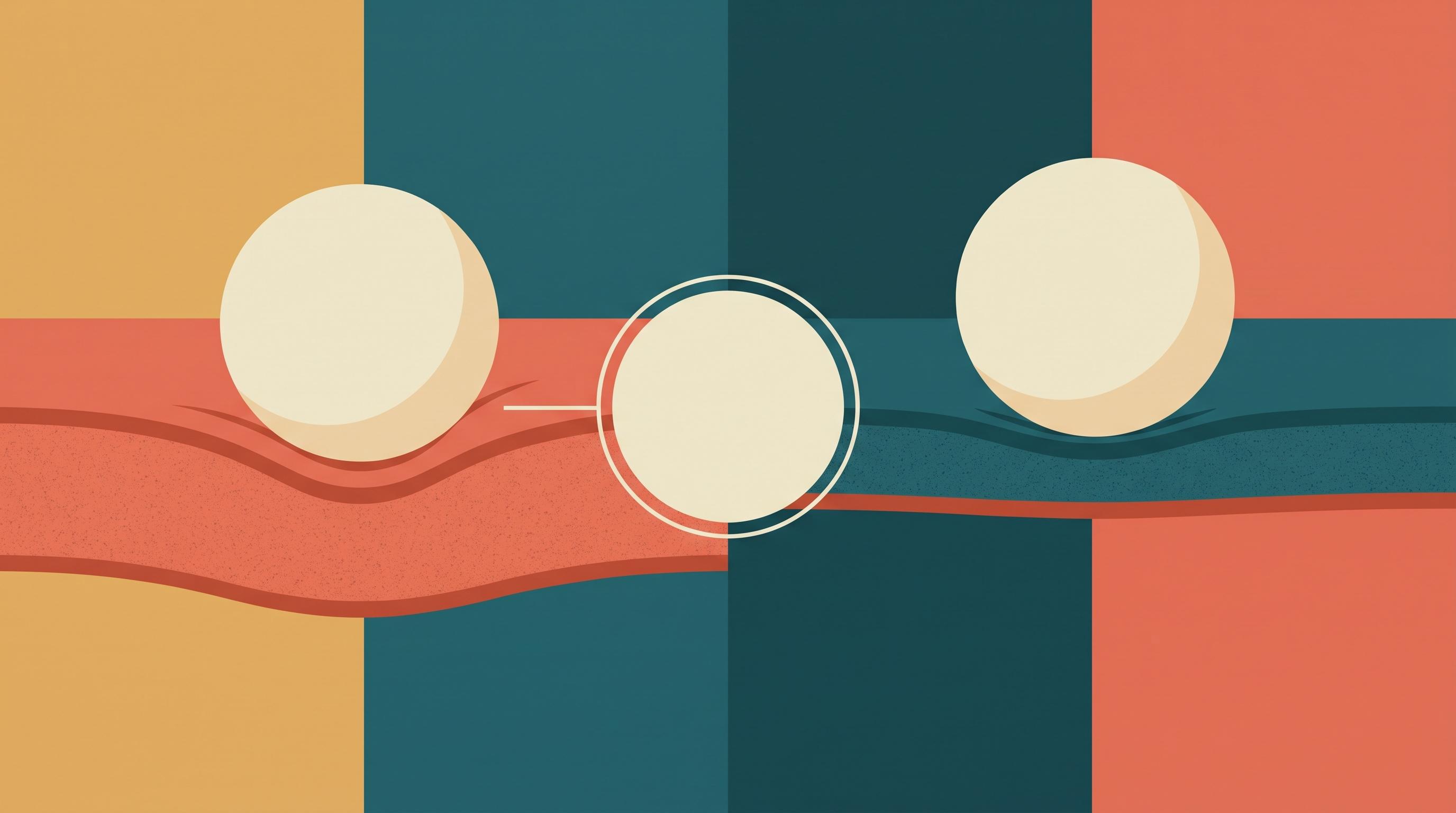
Hard or Soft Table Tennis Rubber?
Harder is not automatically better, and soft is not only for beginners. What the hardness number means and how to compare two rubbers fairly.
4 min read
12 Nov, 2026

For ordinary standing play, touching the table is not automatically a fault. The key questions are what touched it, where the contact occurred, whether the ball was in play and whether the table moved.
The rule is often remembered as nobody can touch the table, which is too broad. A better approach is to separate free-hand contact, movement of the playing surface and contact with the net assembly.
Your free hand is the hand not carrying the racket. If it touches the playing surface during the rally, you lose the point unless the rally is a let. The playing surface is the upper surface; the vertical sides are excluded. Separately, moving the playing surface or touching the net assembly with yourself or something you wear or carry also loses the point. ITTF Statutes 2026 sections 2.1 and 2.10
These distinctions explain why two superficially similar contacts can have different outcomes. The label table touch does not provide enough information to judge the incident.
The free-hand prohibition is not a general ban on the racket or racket hand contacting the tabletop. For a standing player, such contact can be legal if it does not move the playing surface, touch the net assembly or involve another infringement.
A loud tap is therefore not proof of a fault. Conversely, a quiet push that moves the table is not made legal by being accidental. Table Tennis South Australia's officiating guidance highlights movement of the surface as the relevant rule. Rules and discussion
Do not use the possibility of legal contact as a reason to lean on the table. Practise balance and recovery that keep your next shot manageable and avoid unnecessary equipment impacts.
The ball becomes in play as defined by the service sequence and remains so until the rally is decided as a point or let. Waiting until you believe your shot will win is different from waiting until the point is actually over. ITTF Statutes 2026 section 2.5
For example, after smashing a high ball, avoid catching yourself with the free hand on the tabletop while the opponent still has a live return. Train your balance so that your recovery does not depend on judging that moment precisely.
Touching the table between points does not create the same free-hand offence. If you see a player wiping a hand near the net between rallies, do not confuse that with supporting the body during play.
When discussing a disputed point, ask four factual questions:
Describe what was observed before debating intention. The fact that a player did not mean to touch something does not answer whether the relevant rule was broken.
Wheelchair play has its own provisions. When both players are in wheelchairs, a player who touches the table with either hand before striking the ball loses the point, and further rules cover seat contact and footrests. Do not apply this standing-play explanation to wheelchair matches. ITTF Statutes 2026 section 2.10.1.14
For everyday practice, the useful habit is simple: remain balanced, keep your free hand clear during the rally and wait until the point is over before using the table for support.
Harder is not automatically better, and soft is not only for beginners. What the hardness number means and how to compare two rubbers fairly.
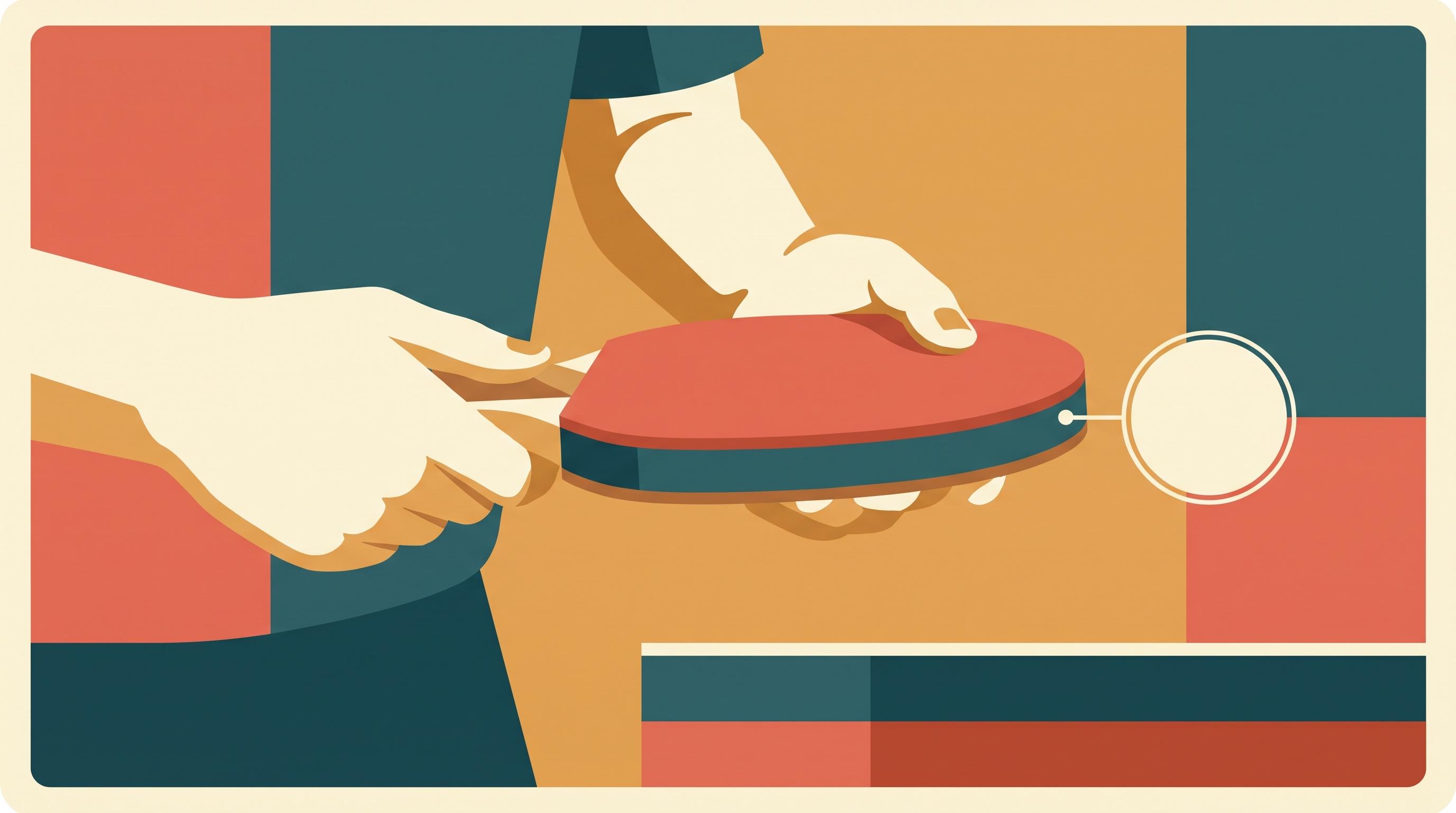
1.8, 2.0, MAX: what the number actually measures, what changes in play, where the legal limit sits, and how to choose a thickness without guessing.
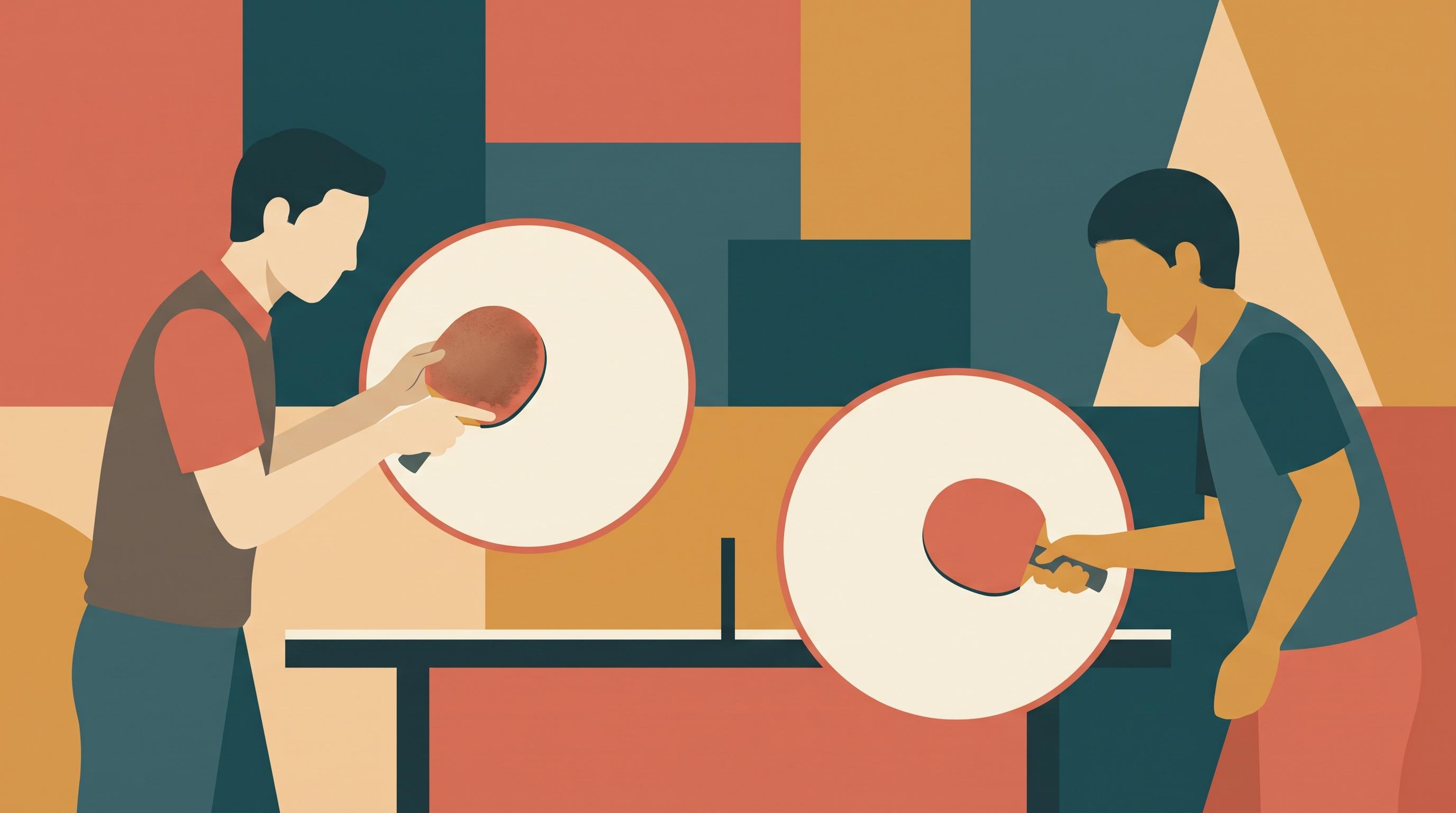
Months on the racket are a reminder to check, not an expiry date. Five signs your rubber needs replacing, what manufacturers say about lifespan, and h...
Harder is not automatically better, and soft is not only for beginners. What the hardness number means and how to compare two rubbers fairly.
Harder is not automatically better, and soft is not only for beginners. What the hardness number means and how to compare two rubbers fairly.
1.8, 2.0, MAX: what the number actually measures, what changes in play, where the legal limit sits, and how to choose a thickness without guessing.
1.8, 2.0, MAX: what the number actually measures, what changes in play, where the legal limit sits, and how to choose a thickness without guessing.
Months on the racket are a reminder to check, not an expiry date. Five signs your rubber needs replacing, what manufacturers say about lifespan, and h...
Months on the racket are a reminder to check, not an expiry date. Five signs your rubber needs replacing, what manufacturers say about lifespan, and h...

Download the app and take your game everywhere: on mobile, tablet, or smartwatch.